
At the Ruth Strauss Foundation, our Ambassadors & Friends play vital roles in helping us raise awareness, inspire action and drive positive change for families facing the incurable cancer diagnosis.

Meet Our Supporters
We are proud & deeply grateful to each individual who steps forward to represent the Ruth Strauss Foundation
Our Ambassadors & Friends generously lend their voices, platforms and time to help support families and increase awareness of the need for emotional and psychological support around incurable illness. Whether through speaking engagements, fundraising, event presence, or simply spreading the word, their contribution is invaluable.
Friends & Public Ambassadors

Courtney Lawes
England rugby international, British & Irish Lions player, and World Cup finalist.

When Nigel was 15, his mother was diagnosed with breast cancer, and she died two years later when he was 17. Looking back, he remembers how little was spoken about her illness. “We didn’t have forms of communication, and my siblings and I were kept out of the loop. It seemed like something that was very much kept away from us.”
After her death, he struggled to process his grief. “We didn’t talk about it at all – we lived our grief in isolation. Each of us dealt with it separately because there was no open communication from the start.”
He recalls how this silence left him emotionally numb for years. “If you’d asked me to do this interview 20 years ago, I would have run. I was unable to talk about it back then; my heart shut down for years.”
Today, as an ambassador for the Ruth Strauss Foundation, Nigel shares, “If I’d been able to come to the Ruth Strauss Foundation and talk, I think it would have changed my life.” He now advocates for honest conversations with children when a parent is dying, believing that “So much connectivity and love can be born from simply talking about the reality that we are going to die at some point.”

Jim Carter OBE
BAFTA-nominated actor best known as Mr Carson in Downton Abbey.

“My dad sadly was diagnosed with lung cancer in January 2024 and passed away in August. Grieving somebody while they’re still alive was a whole new process. It was something we had to come to terms with while trying to enjoy the last months with Dad.
Myself, my brother and sister didn’t think the year could get any worse – we’d already lost a best friend as well as our Dad. Then in December, our mum sadly passed away too, after battling alcohol addiction for more than 15 years. Guilt, anger, sadness – they all ran through my core as I tried to understand why all this had happened.
Seeing the work and awareness raised by the Ruth Strauss Foundation gives me hope. For those who’ve lost a parent, it’s a lonely place to be. Having love and compassion around you is the only help we can give.
Sport has, and always will be a huge part of my life – and it has been my saving grace over this last year. Grief never fully leaves us. We just learn to understand it and sit with it.”

Sir Alastair Cook CBE
England’s highest-scoring Test cricketer and former national team captain.

Kate Cross
England cricketer, podcaster and regular voice on BBC’s Test Match Special.

Harry Judd
Musician and drummer for McFly; winner of Strictly Come Dancing.
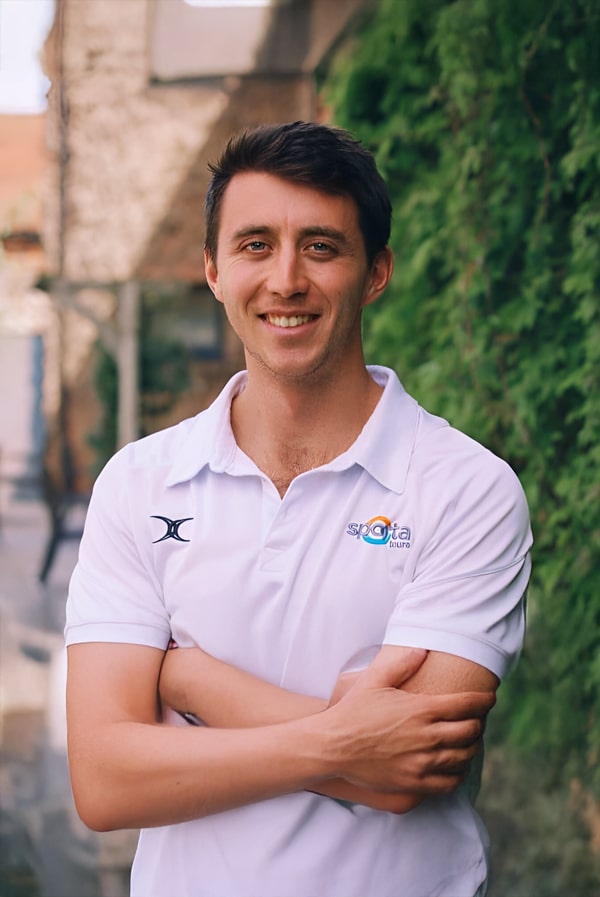
Toby Marriott
Founder of Cricket District and award-winning digital content creator in the world of cricket.
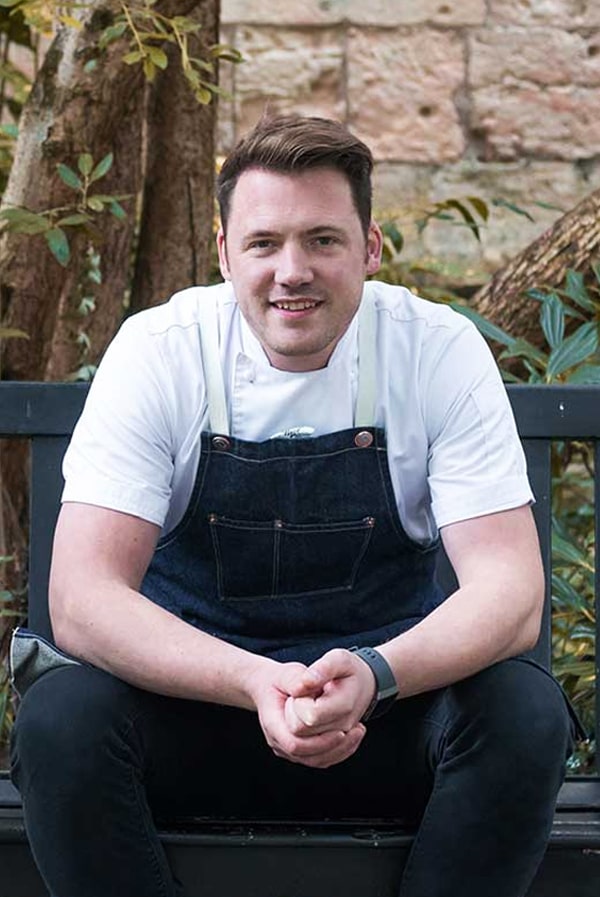
Tommy Banks
Michelin-starred chef, restaurateur and advocate for sustainable, farm-to-table cooking.

Colin McFarlane
Actor and voice artist, known for The Dark Knight, Doctor Who and Outlander.

Johnny Nelson
Former WBO world cruiserweight champion and Sky Sports boxing pundit.

Andy Zaltzman
Comedian, satirist and host of The News Quiz and The Bugle.
Family Ambassadors

Harriet’s husband, Rob, a fit and healthy RAF pilot, was diagnosed with incurable stage IV lung cancer when their children were seven and five. “It felt incredibly isolating. The Foundation gave us reassurance that we weren’t the only people going through this.”
She remembers how Rob approached his illness: “He had such a fire in him to make a difference and was always there to help and support others.” After he died in April 2023, Harriet continues to draw strength from his legacy. “I know he would want me to be brave and make a difference too.”

Professor of Psychology, Research Trustee at EGFR Positive UK, and mother of two, Gini was diagnosed with stage IV non-smoking lung cancer while on maternity leave. “I genuinely couldn’t believe it. It felt like my world suddenly collapsed and made no sense.”
Despite never having smoked, she developed a rare EGFR mutation. “I always linked lung cancer to smoking. I certainly never thought it was something that could happen to me and not at such a young age.”
Gini campaigns for better awareness and psychological support, emphasising, “Patients often leave discussions feeling confused or uncertain, which can increase their anxiety and distress. Therefore, we need to focus on clear, empathetic communication to truly meet their needs during such challenging times.”
Her message is one of hope: “First of all, don’t panic! I know when you are first diagnosed with cancer it can feel like the end is near, that’s not necessarily the case anymore. In the last couple of months alone I have met several long-term survivors… If it can happen to them, it can happen to you!”

When Will’s wife, Simona, was diagnosed with incurable bowel cancer, their world changed overnight. With two young daughters to support, Will turned to the Ruth Strauss Foundation for guidance on how to talk to his children about what was happening. “I was completely overwhelmed and needed to explain to the girls what was happening without terrifying them. Within an hour, I had an email back with practical, realistic advice.”
Through the Foundation’s peer support and family services, Will and Simona were able to prepare their daughters with honesty and care. “The girls knew their mum was sick. They even decorated her medical bag with drawings. We normalised the hospital visits and removed some of the fear.”
Will joined RSF’s peer group for parents, finding a space to share openly with others facing similar situations. “It was a space where we could be honest without judgement. Sometimes it was dark, sometimes it was funny but it was real.”
Now a single parent, Will continues to speak up for families navigating life after an incurable diagnosis. “Grief doesn’t disappear – it evolves. The sooner you seek support, the better equipped you’ll be to face what’s ahead.”

When Sam’s partner Matt was diagnosed with an incurable brain tumour in 2020, their children were just seven and eight. “My initial feelings were ‘When do we tell them, how do we tell them, and what do we tell them?’ It took Matt some persuading to tell the kids. He was quite taken aback by using the word ‘cancer’.”
Having lost her own father as a child, Sam wanted to support Josh and Poppy differently. “Having lost my Dad, it made it easier to put myself in their shoes.”
With support from the Ruth Strauss Foundation, they prepared their children for what was coming. “When Matt died, the children said to me ‘I always knew what was going to happen’ and I think that’s why they’ve fared so well.”

After losing his wife Erika to bowel cancer in 2022, Richard found himself navigating life as a widowed father to Seb and Alex. “That conversation with the children was incredibly hard – one of the hardest I’ve ever had – but Erika handled it amazingly well,” he says.“And I’ve seen the positive impact it’s had. The boys have been able to thrive, not just survive – and that’s a gift she gave our family.”
To honour Erika’s memory and raise awareness for families like his, Richard set himself a challenge – six running events in six months, dressed in full cricket kit and carrying a bat – to raise funds for the Ruth Strauss Foundation. “It’s not about time – it’s about starting conversations.”
Although he hadn’t known about RSF at the time of Erika’s illness, Richard now champions the charity’s mission. “If we’d known, we absolutely would have reached out. I want to make sure other families don’t miss out on what we missed.”
Through every run, every aching mile, Richard carries not only a cricket bat – but a message: that being brave enough to talk, even when it’s painful, can change everything.

Jonathan, his wife Rebecca and their children Charlie, ten, and Amelia, 12, are among the many families supported by the Ruth Strauss Foundation. Facing an incurable cancer diagnosis, Jonathan has found strength in RSF’s specialist support, helping Rebecca and him navigate this journey and prepare their children for the future.
It has been, as he explains, an emotional rollercoaster since his diagnosis with mucosal melanoma, a rare form of skin cancer, in 2020. At first there was hope – “We were ahead of the game, we were beating it,” as Rebecca puts it. But by late 2021, the cancer had spread further. Despite intensive treatment, options are now limited and the future remains uncertain. “You live three months at a time,” says Jonathan, “which is quite terrifying. But we’re in as good a place as we have been at any time since I was diagnosed.” Throughout this journey, the Ruth Strauss Foundation has been there for the family, helping them to have honest and supportive conversations with their children.
“We’ve been very open throughout,” says Jonathan, “explaining as much as we know, but in a way that they can digest.”
When Jonathan was at the Royal Marsden hospital in London for immunotherapy, Rebecca brought the kids in to visit. “They could see that immunotherapy isn’t something scary or frightening,” she says. Jonathan and Rebecca have noticed that while their children absorb the complex and upsetting information, it can take them time to process it and questions often come later at unexpected moments.
Friends have stepped up to support the couple, but Jonathan finds it important that cancer doesn’t dominate every conversation. “I just want to be normal,” he says. “You don’t want to be ‘that guy’ with cancer. Having certain anchors in your life is important, like going out with friends and not talking about me.” Another anchor for Jonathan is cycling, where he “can be just a guy with a cycle helmet on a road somewhere, anonymous”. He has been inspired by the defiant attitude of Sir Chris Hoy, also 49, the six-times Olympic champion cyclist who is living with stage 4 prostate cancer. “I’ve always returned to my running and cycling as almost a challenge to myself after surgery or treatment,” says Jonathan. “Seeing Sir Chris Hoy raising awareness of what people with stage 4 can do is amazing.”
The Ruth Strauss Foundation has been a source of strength for Jonathan. For him, the benefit of RSF’s counselling is “having someone to talk to who isn’t a friend or a medical professional”. The RSF Family Support Team is made up of registered counsellors and trained professionals who know how to support families through difficult conversations, helping them feel reassured and less alone.
What Do RSF Ambassadors Do?
Our Ambassadors support the Ruth Strauss Foundation by:
- Representing the charity at events and speaking engagements
- Sharing our messages through personal platforms and networks
- Taking part in or leading fundraising activities and campaigns
- Helping us build connections with communities, businesses and media
- Using their voice to raise awareness of the emotional impact of incurable cancer diagnosis on families
Why Become an Ambassador?
Becoming an RSF Ambassador is a way to stand alongside families facing the toughest of times. It offers:
- A chance to use your platform for lasting impact
- The opportunity to share your story and help others feel less alone
- Connection with a community driven by empathy and purpose
- Access to RSF Ambassador updates, opportunities and support