
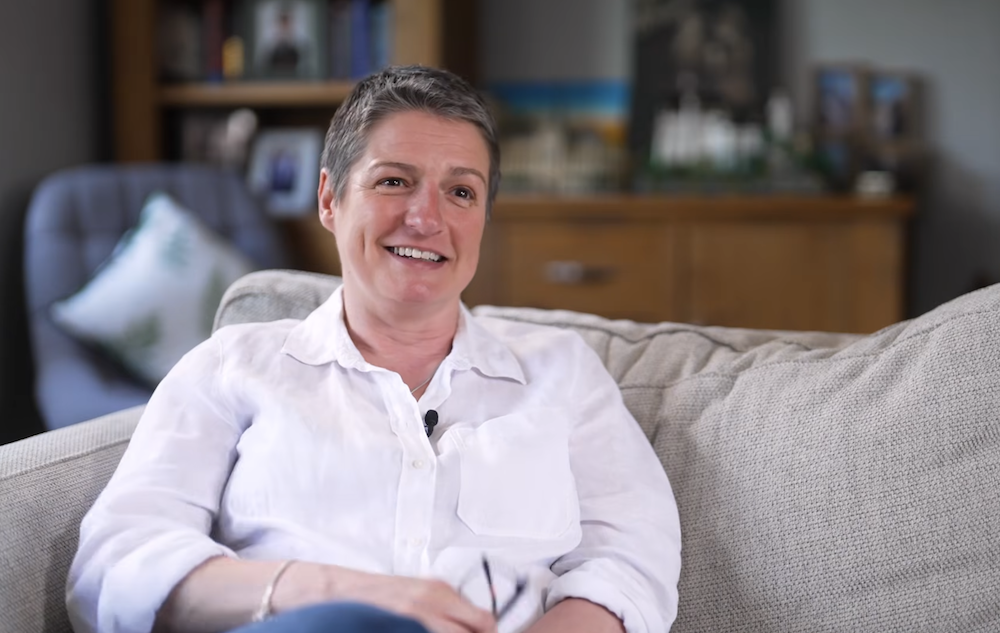
Meet Jackie and Dom
How Jackie Chose Hope and Making Memories With Her Son
Living with an incurable cancer diagnosis changes everything. For many parents, one question rises above all others: how do I tell my child? For Jackie, the answer was never about finding the perfect words. It was about choosing honesty, creating memories and making sure her 16-year-old son, Dom, knew they would face whatever came next together.
Life for Jackie and Dom has always revolved around cricket. Weekends are spent at their local club in Derby, where Dom plays and Jackie joins in whenever she can. Music is another shared passion, with concerts becoming treasured opportunities to spend time together.
Those everyday moments have become even more precious since Jackie was diagnosed with a rare, aggressive cancer. While the future is uncertain, she has made a conscious decision not to let cancer define the time they have together.
With support from the Ruth Strauss Foundation, Jackie has found reassurance that being open with her son, involving him in difficult conversations and allowing him to process events in his own way is helping prepare them both for whatever the future may hold.
When Everything Changed
Receiving an Incurable Cancer Diagnosis
Jackie never expected a routine operation in October 2024 to uncover cancer. “It was totally unexpected,” she recalls. “We thought it was just a routine surgery.”
Further surgery and treatment followed, but several months later Jackie was told that her cancer was no longer curable. Hearing those words was devastating, but the first thing she thought about wasn’t herself – it was Dom. “You just think about your child,” she says. “What’s he going to do? Is he going to be okay?”
Jackie describes those early months as overwhelming, trying to understand what the diagnosis meant while imagining how it might affect her son’s future. Like many people living with an incurable cancer diagnosis, she found herself adjusting not only to the illness itself, but to a completely different perspective on life.
“You never go back to being the person you were before cancer,” she says. Among all the uncertainty, one sentence from her consultant stayed with her. “You need to go and live your life.” At first, those words felt impossible to accept. “I remember thinking, ‘How dare you say that to me? You’ve just given me the most crushing news.'”
Over time, however, the phrase began to take on a completely different meaning for Jackie and Dom. What once felt difficult to hear became a reminder to keep making plans, creating memories and saying yes to opportunities.
“We use it all the time now,” Jackie says. “If Dom is hesitant about doing something, he’ll say, ‘Well, Mr Abdul said we’ve got to go and live our lives.'” It has become something that continues to guide them both – a reminder that even with uncertainty ahead, there is still life to be lived.
Choosing Honesty
Talking to Children About an Incurable Cancer Diagnosis
For parents living with an incurable cancer diagnosis, knowing what and how much to tell their children can feel overwhelming. From the beginning, many of Jackie’s most difficult decisions centred on Dom.
Like many parents, her instinct was to protect him. But she also knew that protecting him didn’t have to mean shielding him from the truth. She wanted their home to remain a place where nothing important was hidden, even when the conversations felt impossibly hard.
Rather than deciding what Dom could or couldn’t cope with, Jackie asked him directly. “I said, ‘Do you want me to tell you everything that’s happening from now on?'” His response left no room for doubt: “‘Please don’t keep anything from me.'”
From that moment, openness became the foundation of how they navigated life together. Jackie wanted Dom to understand what was happening in his own time rather than having to fill in the gaps himself. “There was no way I wanted to live in a house where I was keeping things from him,” she says.
When Jackie learnt that her cancer was no longer curable, she did need some time before telling him. “I needed a little bit of time to process it myself,” she explains. “It was the hardest conversation I’ve ever had.” But once she had begun to process the news herself, she knew she wanted Dom to hear it from her. “I realised I had to face it,” she says. “And part of facing it was telling Dom.”
Support from the Ruth Strauss Foundation helped give Jackie confidence that her instincts were the right ones. Through sessions with one of the Family Support team member, she found reassurance that openness, when handled carefully and appropriately for the child, can help families navigate incredibly difficult conversations.
“It wasn’t about someone telling me exactly what to do,” Jackie says. “It was hearing, ‘You’re doing okay. The way you’re approaching this is okay.'” That reassurance gave her confidence to continue being honest with Dom while recognising that he needed to process things in his own way. “I don’t think anything positive comes from living in a secretive environment,” she says. “We’re all going through this together, and we all need to understand what’s happening.”
Making Memories
Finding Normality Through Cricket and Everyday Life
Since her diagnosis, Jackie has made a conscious decision not to let cancer become the centre of every moment she shares with Dom. There are appointments, treatment decisions and difficult conversations, but alongside all of that there is still cricket, music, laughter and the everyday routines that have always made their relationship special.
Dom plays cricket regularly, while Jackie is often there watching, supporting and occasionally joining him through indoor cricket. “I absolutely love playing with him,” she laughs. “He’s forever telling me I’m doing everything wrong.”
Music gives them something else to enjoy together, with concerts and days out providing plans to look forward to. For Jackie, those experiences matter because they are shared. “I don’t want Dom to look back and remember the sadness of all this,” she says. “We have to make memories.”
She has also realised that meaningful memories don’t need to come from extraordinary experiences. Often, they are found in conversations in the car, weekends at cricket or simply spending time together at home.
Before her diagnosis, Jackie describes herself as someone who was always busy, constantly juggling work and responsibilities. Now, she makes a conscious effort to be present. “If I’m spending time with Dom, then I’m spending time with Dom.” It’s a change in perspective she wishes she had found earlier. “Just say yes to stuff,” she says. “Live your life.”
Every Child Processes Cancer Differently
Helping a Teenager Navigate a Parent’s Cancer Diagnosis
One of the hardest things for Jackie has been learning that Dom’s way of coping doesn’t always look like talking. His initial response to the diagnosis was a mixture of shock, upset and anger. “He was angry,” Jackie remembers. “Just thinking, ‘Why is this happening to us?'”
While Jackie often finds comfort in talking, Dom tends to turn towards familiar things. Cricket became even more important, alongside music and the activities that helped life continue to feel normal. “I think distraction is his way of coping,” Jackie says.
Rather than forcing conversations, she has learnt to recognise the moments when they happen naturally. “If I sit him down and ask, ‘Do you want to talk?’ the answer is usually no,” she explains. “But if we’re in the car together or walking somewhere, I might ask one or two questions and that’s when I get something.”
One particularly important conversation came after Dom’s school noticed that his grades had dropped. When Jackie gently asked what was going on, his answer showed just how much he had been carrying quietly. “It’s constantly in my head.” Later, he told her: “I’m just getting my head around it.” For Jackie, those few words mattered. “Maybe that’s as much as I get from a teenage boy,” she says. “But actually, that’s still talking.”
Supporting Dom isn’t about expecting him to respond in a particular way. It’s about making sure he knows the door remains open whenever he is ready.
Support for Families
Finding Reassurance Through the Ruth Strauss Foundation
For Jackie, one of the hardest parts of living with an incurable cancer diagnosis has been knowing how best to support Dom. Her biggest concern has always been making sure he had the honesty, space and reassurance he needed. That’s where the Ruth Strauss Foundation became such an important part of their journey.
Through the Foundation, Jackie was able to speak with our specialist team who understood the challenges families face when a parent has incurable cancer – from knowing how much to share to preparing children for the future. “I don’t think I realised how valuable talking to the RSF Family Support team would be,” Jackie says.
What she needed wasn’t someone to give her a list of instructions. She needed somewhere to ask the questions she was carrying as a parent. Was she telling Dom too much? Should she involve him in difficult conversations? Was being so open really the right thing to do? “The RSF Family Support specialist helped me think through every step,” she explains. “More than anything, she helped me realise that I was doing okay.”
The sessions also helped Jackie understand that Dom didn’t need to process everything now. Having lost her own father when she was 19, she knows difficult emotions don’t follow a timetable. “They said, ‘Tell him that. Let him know that if he needs support in ten years’ time, that’s okay too.'”
The Foundation’s support also helped Jackie think about Dom’s life beyond home. Knowing how much time children spend at school, she wanted his teachers to better understand how to support a young person facing a parent’s incurable cancer diagnosis.
The Ruth Strauss Foundation’s Schools Programme helps equip education staff with the skills and confidence to support students through anticipatory grief and bereavement. Jackie knew that simply asking Dom “Are you okay?” while passing him in a corridor wasn’t always enough. “He’d just say, ‘Yeah, I’m fine.'” For many children and teenagers, opportunities to speak need to happen in the right environment and at the right time. For Jackie, RSF’s support has helped her feel more confident that she is giving Dom the honesty, space and support he needs.
”“I don't want Dom to remember the sadness of all this. We have to make memories. We have to enjoy life.”
Jackie
Planning for the Future
Living With an Incurable Cancer Diagnosis and Preparing Ahead
Living with an incurable cancer diagnosis can also mean thinking about a future no parent wants to plan for. For Jackie, preparing ahead isn’t about giving up hope. It’s about making things easier for the people she loves and making sure Dom remains at the centre of the decisions that will affect him. “My priority is making sure everything is in place for Dom.”
That includes practical planning, but also decisions about how much Dom should be involved in conversations about the future. Jackie has begun making plans herself so that, when the time comes, the people around her aren’t left trying to work out what she would have wanted. “I don’t want people trying to work out what I would have wanted while they’re grieving.”
She has also thought carefully about what she might leave for Dom. Initially, Jackie imagined writing letters for every major milestone in his life. Over time, she decided that wasn’t what she wanted. “I don’t want him to feel he has to stop enjoying one of the happiest days of his life because he needs to read a letter from me.”
Instead, she plans to write one letter that will be there whenever he chooses to read it. “If he’s having a difficult day, or needs me, or is facing a big decision, it’ll be there.”
Jackie’s Advice
Say Yes to Life
Throughout everything Jackie has experienced, one belief has remained constant: children need the opportunity to talk and be heard. “We have to be better at encouraging children to talk and encouraging them to have a voice,” she says.
With Dom, Jackie has learnt that those conversations don’t always happen on demand. Often, they emerge naturally: in the car, while walking or simply spending time together. Her role is not to force them, but to make sure the opportunity is there when he is ready.
Jackie also encourages other families living with an incurable cancer diagnosis to accept the support available to them, rather than feeling they have to navigate everything alone.
But perhaps the biggest change has been in the way Jackie approaches life itself. She spends less time hesitating and more time saying yes – something she wishes she had learnt long before her diagnosis.
“I’d love to go back and tell myself prior to diagnosis: just say yes to stuff. Just live your life. Give it a go. If you enjoy it, you enjoy it. If you don’t, you don’t. I wish I’d had that approach, and I very much have it now.”
”“Just say yes to stuff. Just live your life. Give it a go. If you enjoy it, you enjoy it. If you don’t, you don’t."
Jackie
Hear From Jackie and Other Families
Watch Jackie and other families share their experiences of facing an incurable cancer diagnosis, and how support from the Ruth Strauss Foundation has helped them navigate what comes next.